How researchers finally pinned down the age of Ukraine’s mammoth bone huts
Researchers used a new dating method to resolve decades of uncertainty over the age of ice age mammoth bone dwellings in Ukraine.
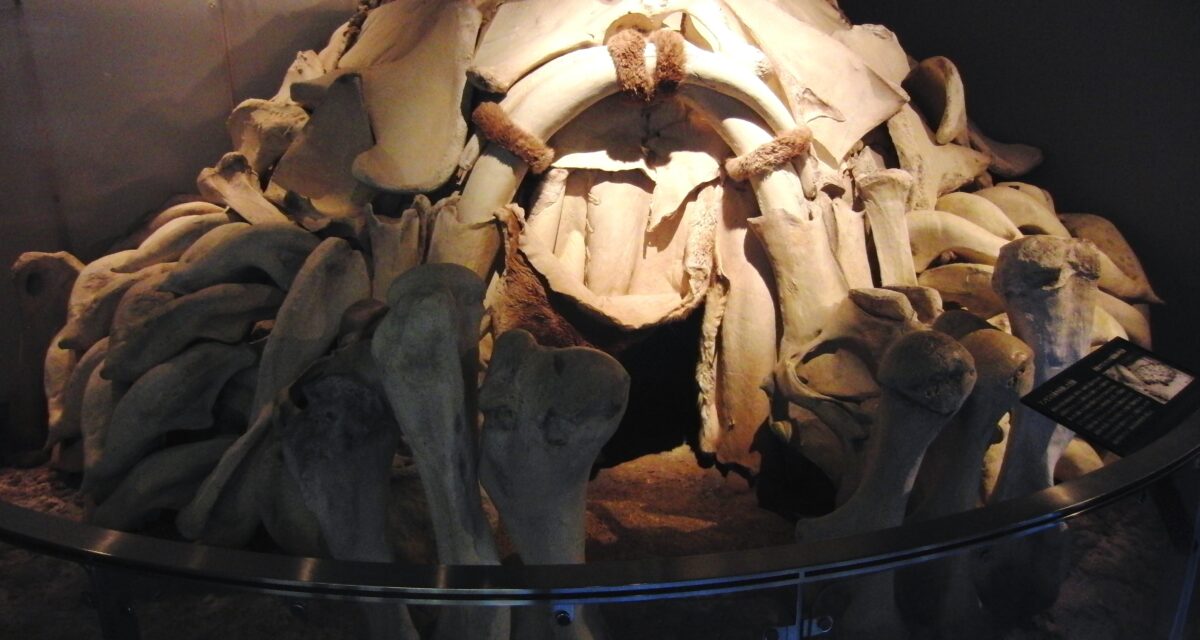
For decades, researchers debated what exactly the circular mammoth bone structures at Mezhyrich in central Ukraine represented — genuine dwellings, storage facilities, or sites tied to ritual purposes — with earlier dating attempts producing ages ranging anywhere from roughly 19,000 to 12,000 years old.
A team led by Wei Chu of Leiden University resolved the uncertainty with a different approach: instead of dating the mammoth bones that made up the structures directly, the researchers dated the remains of about a dozen small animals recovered from the surrounding layers. According to the study published on the Open Research Europe platform, this placed the largest structure at the site, known as MBS4, at between roughly 18,248 and 17,764 years old.
That timeline puts the structure’s construction and use squarely within the harshest phase of the last Ice Age, just after the Last Glacial Maximum, the coldest stretch of the entire glacial period.
The dating also revealed that the shelter was likely used only briefly — the radiocarbon evidence from in and around the structure overlapped closely enough to suggest a handful of separate visits rather than years of continuous habitation, even though the wider dating window suggested it could theoretically have been associated with the site for up to 429 years.

Leave a Reply